If your WordPress site is running the Ninja Forms File Upload plugin, you have an active security problem — not a theoretical one. On 6th April 2026, Wordfence publicly disclosed a critical arbitrary file upload vulnerability in the plugin, and attackers are already exploiting it in the wild. This is not a case of researchers flagging a future risk. Exploitation is happening now, and the consequences for your business can be severe.
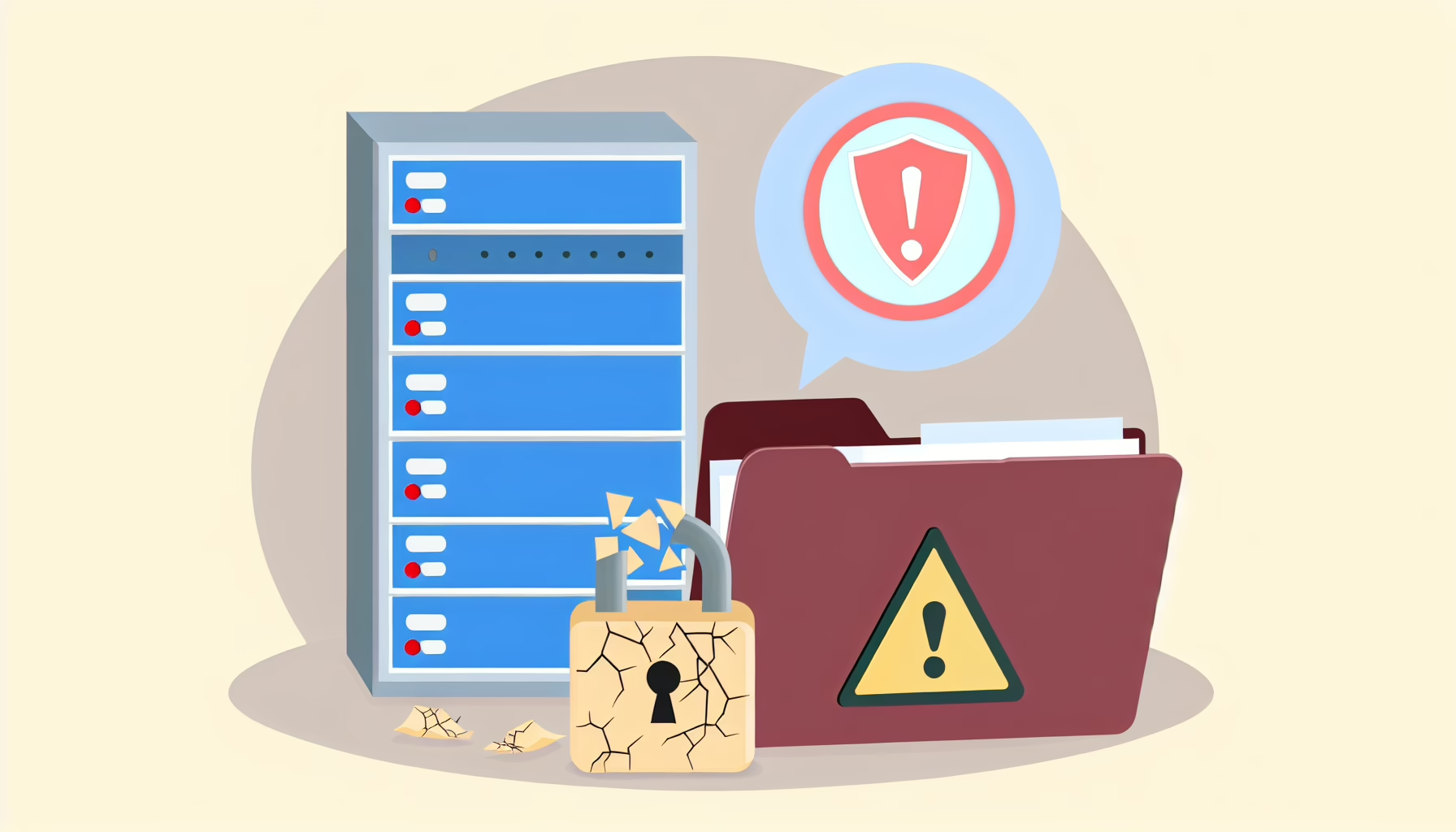
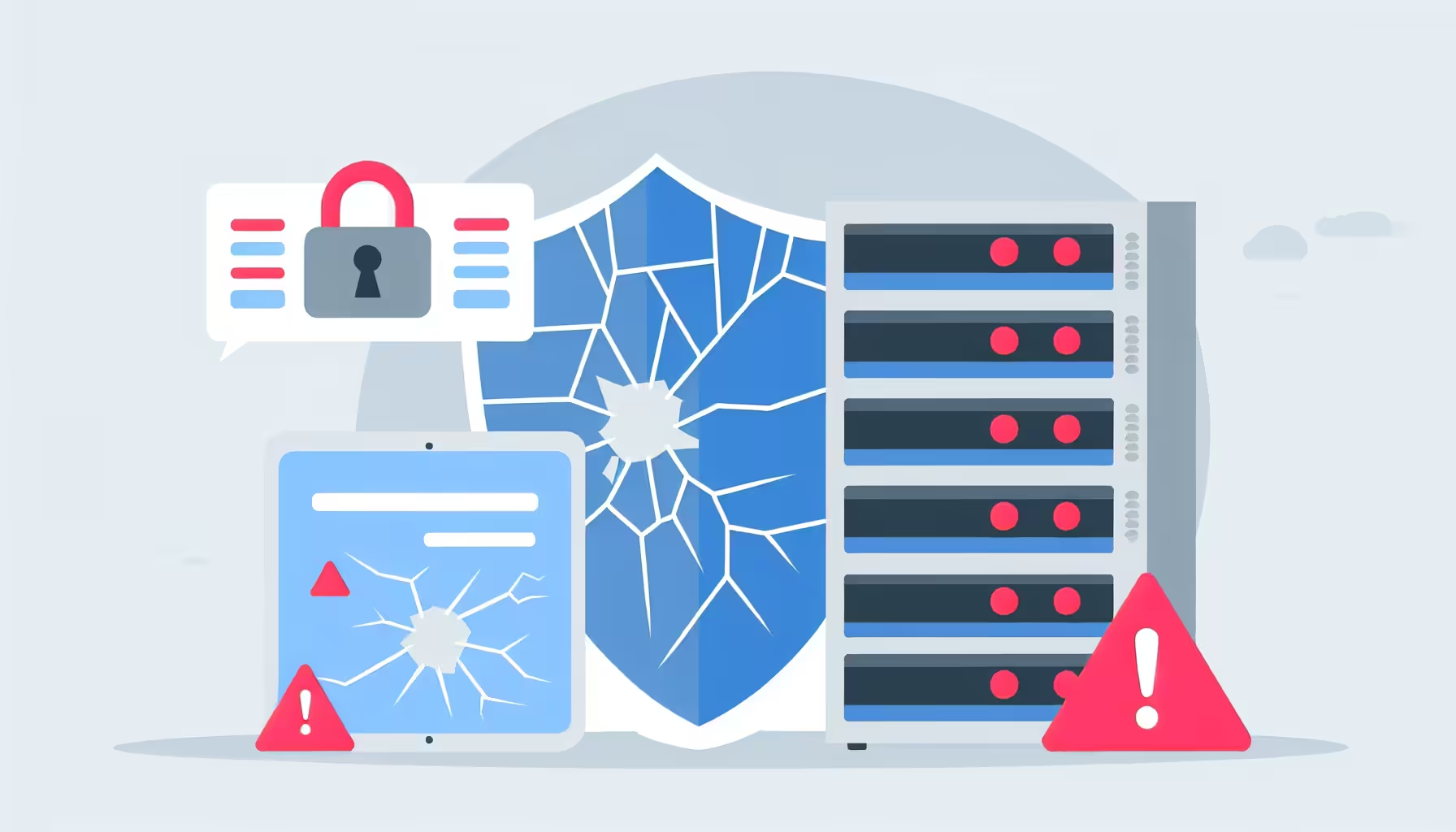
An arbitrary file upload vulnerability means an attacker can push malicious files directly onto your web server — files that then execute with the permissions of your hosting environment. From that point, the situation escalates quickly. Once a WordPress plugin flaw of this kind is exploited, an attacker can gain full administrative control over your site — installing or modifying plugins, accessing and stealing stored user data, altering your website content, creating hidden admin accounts, planting backdoors, and redirecting your visitors to phishing pages or malware delivery sites. In plain terms: your business’s website becomes their tool, used against your customers.
Think about what that means in practice. Customers who visit your site in good faith could be sent to a page designed to steal their payment details or login credentials. Your brand becomes associated with that harm. Depending on what personal data your site holds, you may also face regulatory exposure under UK GDPR. The reputational damage alone — the kind that arrives when a customer emails to say your website tried to install something on their computer — is the sort that takes years to recover from, if at all.
Activity on underground forums confirms that threat actors are already sharing techniques for exploiting WordPress plugin vulnerabilities, which means the window between public disclosure and widespread automated exploitation is narrowing. If you have not already checked whether this plugin is installed on your site and confirmed it is fully up to date, that needs to happen today.
This Is Part of a Broader, Accelerating Pattern
The Ninja Forms vulnerability does not sit in isolation. April 2026 has seen a sustained wave of WordPress plugin attacks that should concern every business owner running a WordPress site, regardless of which plugins they use.
Separately, and running concurrently with the Ninja Forms exploits, someone purchased a plugin company called Essential Plugin — which claimed more than 400,000 installs and over 15,000 active customers — and injected a backdoor into the source code of more than 30 plugins. Those plugins were distributed through normal channels. Any website with those plugins installed received the malicious code automatically. This is what the security industry calls a supply chain attack: your own update process, the very mechanism designed to protect you, becomes the delivery vehicle for the compromise.
Two separate WordPress supply chain attacks within two weeks followed the same pattern: acquire a trusted plugin with an established install base, inherit WordPress.org commit access, and inject malicious code. The attackers are not brute-forcing their way in through the front door. They are buying the keys, walking in quietly, and hiding in the walls. The injected backdoor payload added approximately 6KB to affected plugin files — a detail that is useful if you are having your site examined for indicators of compromise, but not something a typical business owner would ever notice without a professional review.
The broader picture is this: plugin-based attacks are increasing in both frequency and sophistication. Attackers have recognised that plugins are the path of least resistance into WordPress sites. The ecosystem is vast, update discipline is inconsistent, and most business owners are reasonably focused on running their businesses rather than auditing their CMS. That gap is being exploited deliberately and systematically.
What You Should Do Right Now
There are three immediate actions worth taking if you run a WordPress site:
- Check whether the Ninja Forms File Upload plugin is installed on your site. If it is, confirm it has been updated to the patched version. If you are unsure how to do this, do not leave it unresolved.
- Ensure all plugins across your site are current. Outdated plugins are the single most common entry point for WordPress compromises. This is not a one-time task — it requires consistent attention.
- If there is any doubt about your site’s integrity, commission a professional security review. A site that has already been compromised may show no visible signs. Backdoors are designed to be invisible. The absence of obvious symptoms is not the same as a clean bill of health.
Recognising that your WordPress site is a business asset — one that holds customer data, carries your reputation, and interacts with people who trust you — is the starting point for treating its security seriously. The events of April 2026 make clear that the threat environment for WordPress site owners is not abstract. It is active, organised, and increasingly targeted.
If you want an independent assessment of your site’s security posture, or you need to know whether your plugins are up to date and your site is clean, get in touch with me at The WordPress Guy. I work directly with business owners and executives to identify and resolve exactly these kinds of risks — without the technical jargon, and without delay.