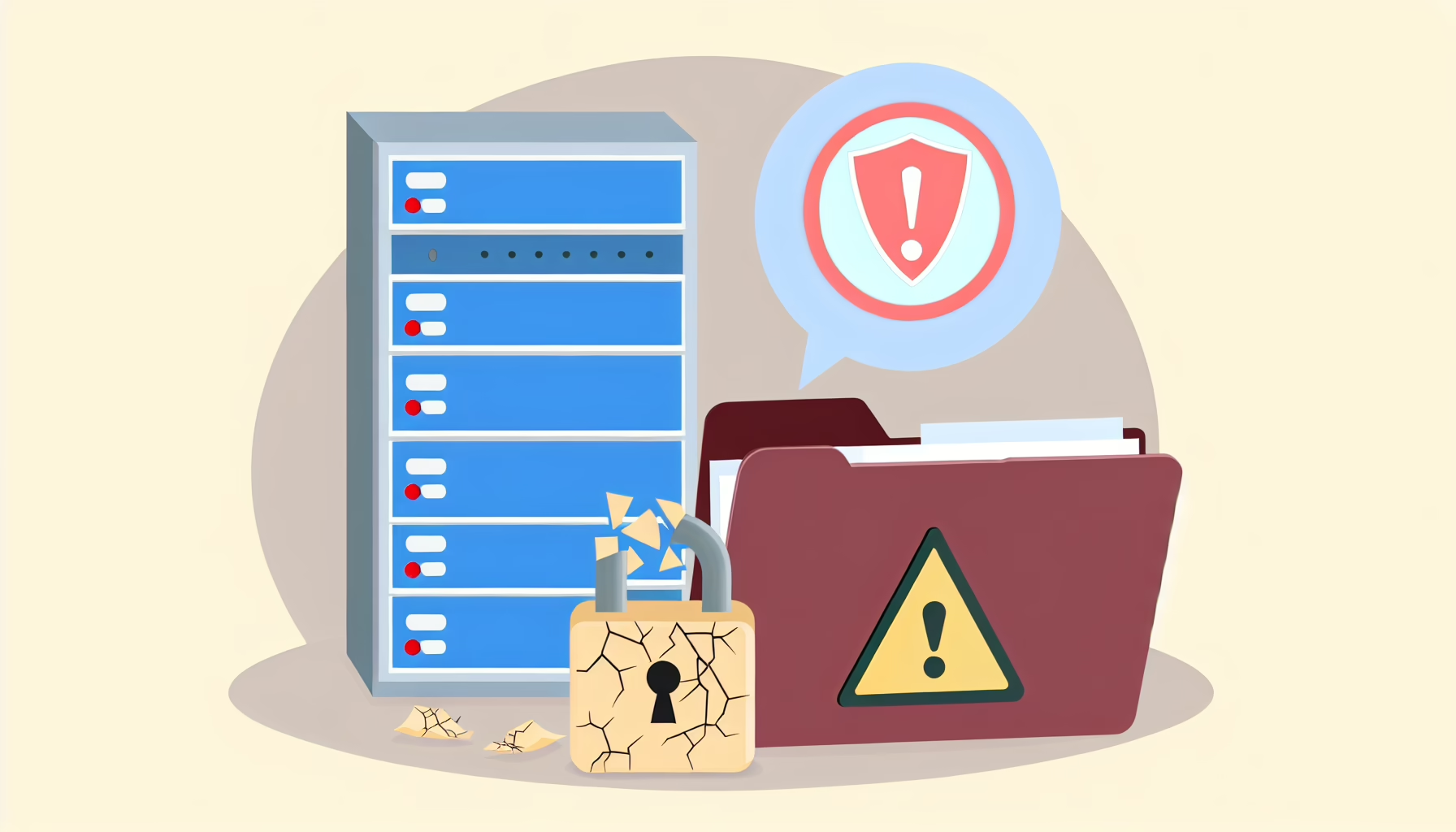
Hackers breached Basic-Fit’s systems and gained access to information belonging to approximately one million customers. Basic-Fit is not a small operation. It operates the largest gym chain in Europe, with more than 1,700 clubs across the continent. If a business of that scale, with the resources that implies, can suffer a breach exposing personal and financial data at this magnitude, the question every business owner should be asking is not whether it could happen to them — but whether they would know if it already had.
The cyberattack targeted an internal system used to record member visits, exposing personal and financial data of members across six European countries. This detail matters. It was not a flashy public-facing application that attracted the attack. It was a routine internal system — the kind of back-end infrastructure that businesses rarely think about once it is up and running. That is precisely the problem. The systems that feel unremarkable are often the ones that receive the least security attention, and yet they hold real data about real people.
Why EU Data Protection Law Makes This a Business Problem, Not Just a Technical One
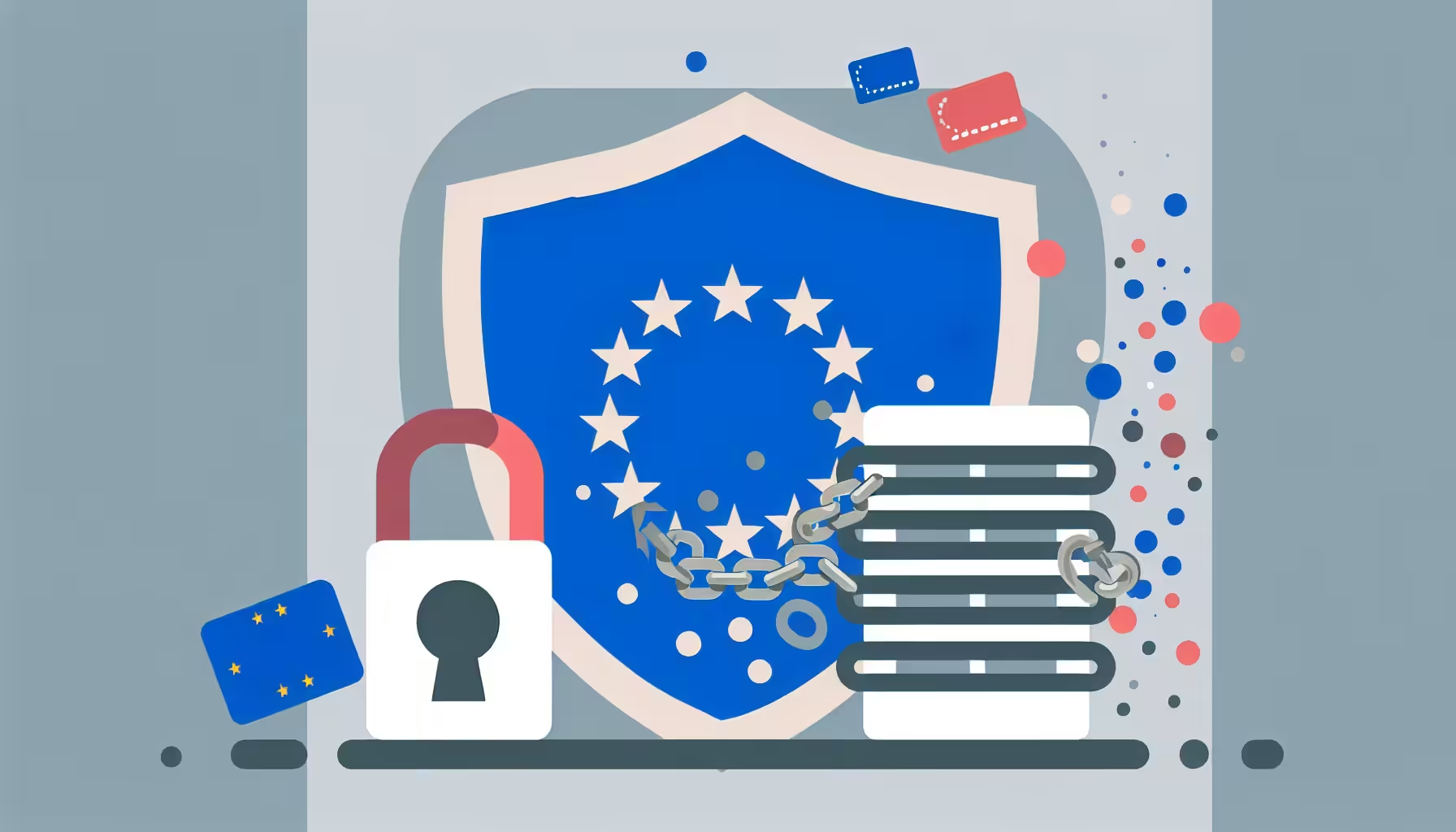
If you store personal data belonging to European residents — whether you are based in the EU or not — you are operating under a legal framework that carries serious consequences for failures. Under data retention laws in the European Union, Basic-Fit is required to delete all personal data and membership records automatically after two years. That obligation exists because the law recognises a simple principle: data you do not hold cannot be stolen. Retaining data longer than necessary, or failing to enforce automated deletion, increases your exposure with every passing month.
GDPR does not distinguish between a gym chain with 1,700 locations and a small business running a WordPress membership site. The obligations — to protect data, to limit retention, to report breaches — apply at every scale. What changes is the visibility. When a business the size of Basic-Fit suffers a breach, it becomes international news. When a smaller business suffers one, the regulatory investigation and the reputational fallout can still be severe, even if the headlines are quieter.
Reputational damage deserves more attention than it typically receives in technical conversations about security. A breach is not just a compliance event. It is a moment when every customer whose data was exposed decides, consciously or not, whether they still trust you. For a membership-based business — whether that is a gym, a subscription service, a coaching programme, or an e-commerce store — that trust is the foundation of revenue. Losing it is not abstract. It is measurable, and often permanent for a proportion of your customer base.
What This Means for Your WordPress Site
WordPress powers a significant share of the web, including a large number of business sites that routinely hold more sensitive data than their owners realise. Consider what a typical WordPress business site accumulates over time:
- Contact form submissions containing names, email addresses, and enquiry details
- WooCommerce order records including billing addresses and purchase histories
- Membership plugin databases holding login credentials and personal profiles
- Booking system records with client contact information and appointment data
- Stored payment tokens or subscription data linked to third-party processors
None of these feel dramatic in isolation. A contact form enquiry from three years ago does not seem like a liability. But in aggregate, over the lifetime of an active business site, these records represent exactly the kind of data that attackers target — and exactly the kind of data that data protection law requires you to handle with care.
The parallel with Basic-Fit’s breach is direct. Their exposed system was an internal visit-recording tool — not a headline product. Your WordPress database is your internal system. If it has not been reviewed, hardened, and maintained with the same seriousness you would apply to any other business asset, it carries risk that may not be visible to you until something goes wrong.
Security hardening for WordPress is not a one-time task. It is an ongoing discipline that includes keeping the core installation, themes, and plugins updated; enforcing strong authentication on all administrative accounts; restricting access to sensitive areas of the site; reviewing and removing data that no longer needs to be retained; and monitoring for indicators of compromise. Each of these areas requires regular attention, not a single action performed at launch and then forgotten.
I work with business owners and entrepreneurs at The WordPress Guy to assess and strengthen the security posture of their WordPress environments — before an incident forces the conversation. A security review looks at the full picture: what data your site holds, how access is controlled, where the vulnerabilities are, and what needs to change to bring your site in line with good practice and regulatory expectations.
The Basic-Fit breach is a public reminder of what is at stake when security is treated as a background concern. If you are not confident that your WordPress site is properly protected, get in touch and let’s talk through a security review before someone else forces the issue for you.