If someone offered you a £200 note for £5, you would check it very carefully before accepting it. The same instinct should apply when a premium WordPress plugin — one that normally costs £80 a year — turns up on a random website for nothing. That is, in almost every case, exactly what a nulled plugin is: something that looks like a bargain and functions like a trap.
Nulled plugins are premium, paid plugins that have been cracked or modified by a third party to bypass licence key verification, and redistributed without the developer’s authorisation from unofficial websites, usually for free or at a steep discount. Business owners encounter them when looking for ways to cut costs on their WordPress builds — an understandable instinct, but one that routinely ends up costing significantly more than the legitimate licence ever would have.
The appeal is obvious. WordPress plugin licences can add up, particularly if you are running a site with multiple premium tools for e-commerce, SEO, forms, or page building. When a search result shows you the same plugin available for free, the logic of taking it can seem sound. It is not. What you are downloading is not simply a free copy of the software. In the vast majority of cases, it is the software with something added — and that something is there specifically to harm you.
What a nulled plugin actually does to your business
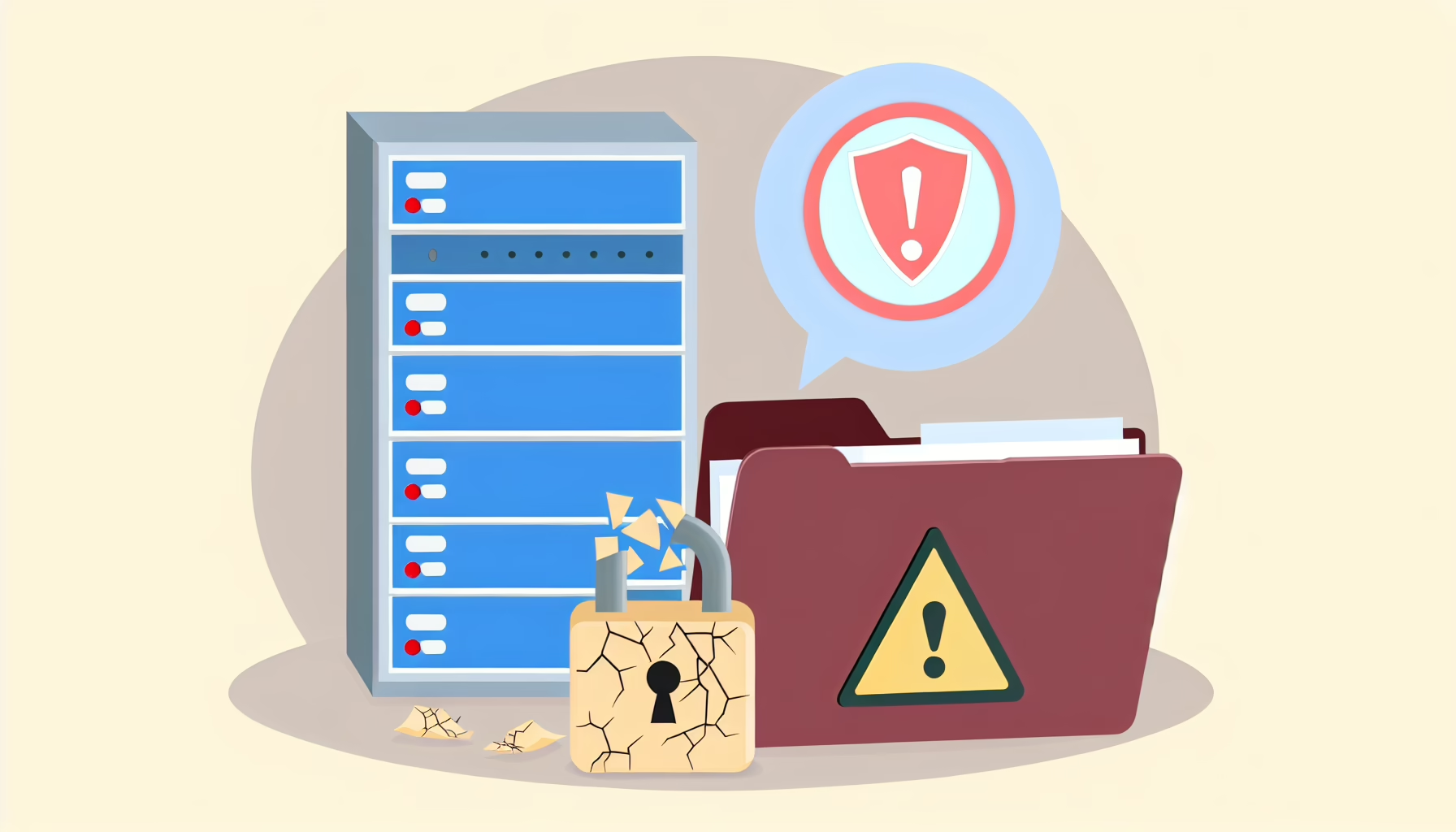
Malicious code, trojans, and backdoors are routinely injected into nulled plugins before they are uploaded to download sites. Once installed, this code can redirect visitors to phishing pages, skim credit card details from checkout processes, deface homepages, or silently turn the server into a spam-sending machine. Each of those outcomes has a direct business cost: lost sales, reputational damage, regulatory exposure, and the time and money required to clean up the infection.
What makes this particularly difficult to manage is the timeline. Malicious payloads are frequently designed to sit dormant for weeks or months before triggering any visible behaviour. By the time your site starts redirecting visitors, your checkout starts behaving strangely, or your search rankings drop without obvious explanation, the nulled plugin that caused the problem may have been installed so long ago that it no longer looks suspicious. Nulled plugins introduce code that is deliberately designed to avoid detection and resist updates, compounding the difficulty of identifying and removing infections. This is not an accident — it is by design. The longer the malicious code goes undetected, the more damage it can do and the more difficult it becomes to trace the source.
The SEO consequences alone can be severe. Search engines penalise sites that redirect users to unrelated or harmful destinations, serve hidden spam links, or host phishing content. Google may remove pages from its index entirely, or display a warning to users before they visit your site. Recovering from a manual penalty or a blacklisting takes time, requires demonstrable remediation, and is never guaranteed to restore your previous rankings. If your business depends on organic search traffic, that is a risk with direct revenue consequences.
Then there is the data dimension. If your site handles customer information — names, email addresses, payment details — and a nulled plugin has introduced a skimmer or exfiltration mechanism, you may be in breach of your obligations under UK GDPR. The Information Commissioner’s Office can issue fines for failures to protect personal data, and the reputational damage of disclosing a data breach to your customers is a cost that no licence fee saving justifies.
Using a nulled plugin is, at its core, software piracy, which carries a legal dimension that many site owners overlook entirely. The plugin’s original developer holds the copyright. Distributing or using a cracked version of their software without a valid licence is an infringement, regardless of whether you were aware the plugin had been modified. Ignorance of the source is not a reliable defence.
Beyond the legal exposure, there is a practical problem that accumulates over time. Because nulled plugins have no valid licence key, owners cannot receive updates from the developer, which significantly increases security risk over time. Legitimate plugin developers release security patches regularly — sometimes in direct response to newly discovered vulnerabilities. Without a valid licence, your installation never receives those patches. The gap between what your site is running and what the current secure version looks like grows wider with every update you miss.
What to do if you suspect your site is affected
The first step is an honest audit of every plugin currently installed on your site. Check each one against its official source — the WordPress plugin repository, or the developer’s own website. If a plugin is listed as a premium product and you do not have a record of purchasing a legitimate licence for it, that warrants investigation. Look at when it was installed, who installed it, and where the file came from.
If you find a nulled plugin, removing it is not sufficient on its own. The infection may have already written itself elsewhere in your files, your database, or your server configuration. A proper remediation process requires a thorough scan of the entire installation, not just the removal of the offending plugin. Replacing the plugin with a legitimately licensed version only addresses the entry point — not the damage already done.
The short version is this: the cost of a legitimate plugin licence is predictable and finite. The cost of dealing with a compromised site — in lost revenue, recovery work, potential fines, and customer trust — is none of those things. The apparent saving is not a saving at all.
If you have any reason to suspect your WordPress site may have been compromised, or if you want a professional review of your current plugin stack, get in touch with me at The WordPress Guy. I can assess what is running on your site, identify anything that should not be there, and advise on the most appropriate course of action.